

It’s hard to find good workers. At least, that’s how the old saying goes.
But imagine it’s not a lack of skilled workers. It’s your employee pay and benefits that are keeping talented individuals from joining your organization. According to a Society for Human Resource Management study, over 60% of respondents stated that benefits are the most important factor in choosing or staying at a job.
Based on these findings, quality benefits (and pay to an extent) are at the forefront of retention and recruitment. You need to offer something that makes your position coveted among eligible candidates. One of those is an attractive pre-tax benefits package.
With a high-quality, pre-tax employee benefits package, you effectively provide employees with the resources they need, decrease income tax liability, and increase take-home pay.
In our pre-tax benefits ultimate guide, we’ll review what constitutes pre-tax benefits, how they compare to post-tax and tax-free benefits, the various types of pre-tax benefits, and how to manage them. Let’s get going.
Employee Pre-tax Benefits: The Ultimate Guide
.png)
A firm knowledge of employee pre-tax benefits is essential to build an adequate and well-funded employee benefits package. The first part of our pre-tax benefits ultimate guide helps you distinguish what qualifies as pre-tax benefits, as well as the common types, deductions, and how to manage your program.
What Are Pre-tax Benefits?
According to the Internal Revenue Service (IRS), pre-tax benefits - or qualified fringe benefits - are the amounts withheld from an employee's gross pay before payroll deductions and local, state, and federal income tax are calculated. Most pre-tax benefits are offered through a cafeteria plan, or Section 125 plan, meaning that the employer offers a “menu” of benefits and allows the employee to choose the ones they want.
What’s the Difference Between Pre-tax, Post-tax, and Tax-free Benefits?
You can’t have a pre-tax benefits ultimate guide without discussing the distinctions between pre-tax, post-tax, and tax-free benefits. Without an understanding of these, adequately understanding your budget and tax liability, or explaining benefits to an employee, can become a taxing venture.
Here’s a quick breakdown:
- Pre-tax benefits: We discussed this above, but for a quick recap, these are monetary amounts withheld from an employee’s paycheck before all applicable federal, state, and local taxes are paid. Examples include employee-sponsored healthcare plans, retirement plans (within contribution limits),
- Post-tax benefits: This includes all premiums or contributions withheld from an employee’s pay after all income taxes, Social Security, and Medicare have been paid. Common post-tax deductions and benefits from net pay include disability insurance, lifestyle savings accounts (LSAs), professional development, meal vouchers, wellness/well-being programs, stipends, Roth 401(k) contributions, some health insurance premiums (typically dental or vision insurance), and wage garnishments.
- Tax-free benefits: These are forms of non-wage compensation that meet specific IRS rules and are excluded from an employee’s gross income and tax liabilities. Remember that these have to be qualified, and eligibility varies, but may include educational assistance, de minimis fringe benefits, and certain types of dependent care or accident/health benefits.
Most Common Types of Pre-tax Benefits

Federal, state, and local governments often require mandatory withholdings for income tax and social programs. But outside of these mandates, employers and employees have optional benefits they can pay for with pre-tax dollars. Here are some of the most common to consider in our pre-tax benefits ultimate guide.
Health Insurance Plans
Employee-sponsored health plans are pre-tax benefits that offset medical expenses and healthcare costs. Though an employer can cover the entire cost of the program, most employers only cover a portion. The rest of the monthly premium is deducted from the employee’s gross pay on a pre-tax basis.
Under the Affordable Care Act, employers with more than 50 employees must offer some form of health insurance that meets minimum standards. Companies with fewer than 50 employees are not required to offer health insurance, but may qualify for a 50% reduction in premiums via the Small Business Healthcare Tax Credit.
Health Savings Accounts (HSA)
Companies looking to cut costs may want to consider a high-deductible health plan (HDHP) coupled with a health savings account. An HSA allows employees to use pre-tax funds to pay for qualified medical expenses, including:
- All medical care and services
- Vision and dental expenses
- Wellness
- Copayments and co-insurance
- Prescriptions and over-the-counter medication
- Healthcare-related travel
However, the health plan must meet these eligibility requirements for 2026:
- An annual deductible of at least $1,700 for self-only coverage and $3,400 for family coverage
- An out-of-pocket maximum, including the annual deductible, does not exceed $8,500 for self-only coverage or $17,000 for family coverage
If a health plan meets these requirements, employees may make pre-tax contributions of up to $4,400 for self-care and up to $8,750 for family coverage. As a bonus, HSA funds don’t expire, allowing them to grow tax-free in a brokerage or savings account.
Flexible Spending Accounts (FSA)
For employees who don’t want a high deductible, employers can offer a health insurance plan with an FSA. Though similar to an HSA, an FSA works with almost any health plan, including low-deductible plans.
In 2026, the IRS allows FSA contributions of up to $3,400 per person or $7,500 per household to pay for any medical expense - including those mentioned under HSA guidelines.
Some employers may want to consider a dependent care FSA. This type of FSA pays for dependent care, including daycare, summer camps, babysitters, and elderly care.
However, FSAs have one major caveat. Any leftover funds at the end of the year are forfeited back to the employer. Make sure your employees are aware of these implications and ensure they spend any contributed funds before year's end.
Group-Term Life Insurance
Employers can offer life insurance up to $50,000 as a tax-free benefit to employees. However, employees can choose to increase the amount of life insurance as part of their pre-tax benefits. Employees can enroll in the life insurance program, choose their limit, and the employer can deduct the additional premium to lower the employee’s taxable income.
Retirement Contributions
Encouraging employees to save for retirement is an integral part of an employee’s well-being. While you can’t force their hand, you can offer tax-advantaged retirement accounts to get their savings on track.
Traditional 401(k) plans and 529 plans used for educational purposes are two of the most popular options. Starting in 2026, employees can contribute up to $24,500 to their 401(k) account, helping them save and reduce their tax burden all at once.
To sweeten the deal, many employers also offer retirement savings matches. For example, employers can match up to 5% of a contribution that an employee makes.
Commuter Benefits
Essential for gridlocked cities and hybrid teams, pre-tax commuter benefits lessen the burden of travel costs for every employee. These employer-sponsored benefit allows employees to set aside part of their pre-tax pay up to $325 per month to pay for parking, carpooling, or transit.
Mandatory Pre-tax Deductions

The federal government requires several types of pre-tax deductions. These mandatory tax withholdings provide for social programs while also lowering an employee’s taxable income. Unless you hire freelancers via a 1099-NEC, you need to deduct these on top of any pre-tax benefits. By understanding what you need to deduct, you can budget appropriately for any perks or benefits you want to offer.
Federal Insurance Contributions (FICA)
Encompassing both Social Security and Medicare benefits, FICA requires employers and employees to pay 15.3% of earnings into the program, split evenly between the employee and employer. Also known as payroll taxes, FICA taxes mandate employers pay 7.65% (half of 15.3%) of an employee’s pay during any pay period. Employers also deduct 7.65% from an employee’s gross pay to put into FICA. Of this percentage, 6.2% goes toward Social Security and 1.45% toward Medicare tax.
However, these programs lower taxable income for both employer and employee, leading to significant tax savings.
Federal Unemployment Tax (FUTA)
The Federal Unemployment Tax Act is a law requiring employers to pay into an unemployment insurance fund at a rate of 6% on the first $7,000 an employee earns. Only employers pay FUTA; employees do not have any deductions related to this program.
If an employer promptly pays FUTA into their state’s program, they can receive a federal tax deduction of up to 5.4%, effectively lowering FUTA to 0.6%.
Federal Income Tax
To eliminate the need for estimated quarterly taxes or huge tax liabilities, employers are required by law to withhold federal income tax, based on the employee’s input on a W-4 form. Like FICA, this withholding is not mandated if you hire freelancers or 1099-NEC workers.
State and Local Tax
Any state and local taxes are also deducted from each paycheck, where mandated by law.
Managing Employee Pre-tax Benefits
The easiest way to manage employee pre-tax benefits is to select a suitable platform that meets or exceeds your benchmarking research. The best employee benefits platforms - both pre-tax and post-tax - allow you to customize your offerings, streamline enrollment, sync to payroll processing via integrations, and simplify employee contributions to retirement accounts.
Check out our list of the top employee benefits platforms to find the perfect mix of benefits, expense, and reimbursement management.
Hoppier Can Help You Manage Benefits
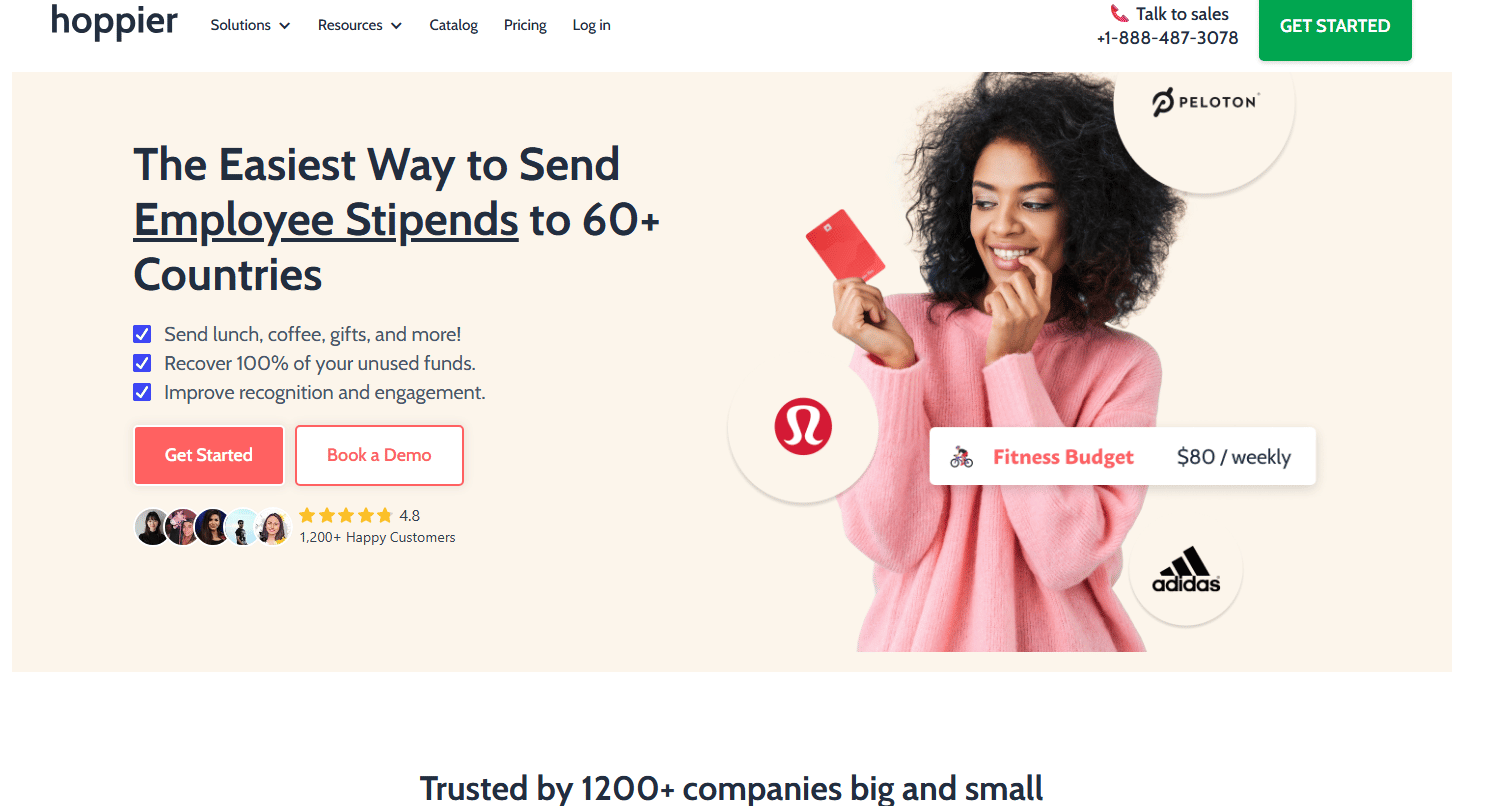
Hoppier isn’t a full-scale benefits solution, but it’s a simplistic approach to post-tax benefits. Through its gift card-based platform, you can send Visa-branded cards to employees in over 60 countries, covering perks, stipends, meal vouchers, lifestyle spending accounts (LSAs), and more.
In a competitive job market, offering post-tax benefits on top of pre-tax benefits can level the playing field, encouraging new hires to join your business and current employees to remain loyal. Hoppier acts as the glue, giving new life and smooth operation to your benefits program.
Make Hoppier your unfair advantage
Send rewards, gifts, and perks to employees, clients, and event attendees in 60+ countries - all from one platform.
Get Started