Corporate Gift Card Programs: How To Set One Up (and What It Really Costs)
How to run a corporate gift card program for employees or customers: occasions, amounts, choice, unspent-value economics, taxes, and a launch checklist - with data from 2,090 real programs.

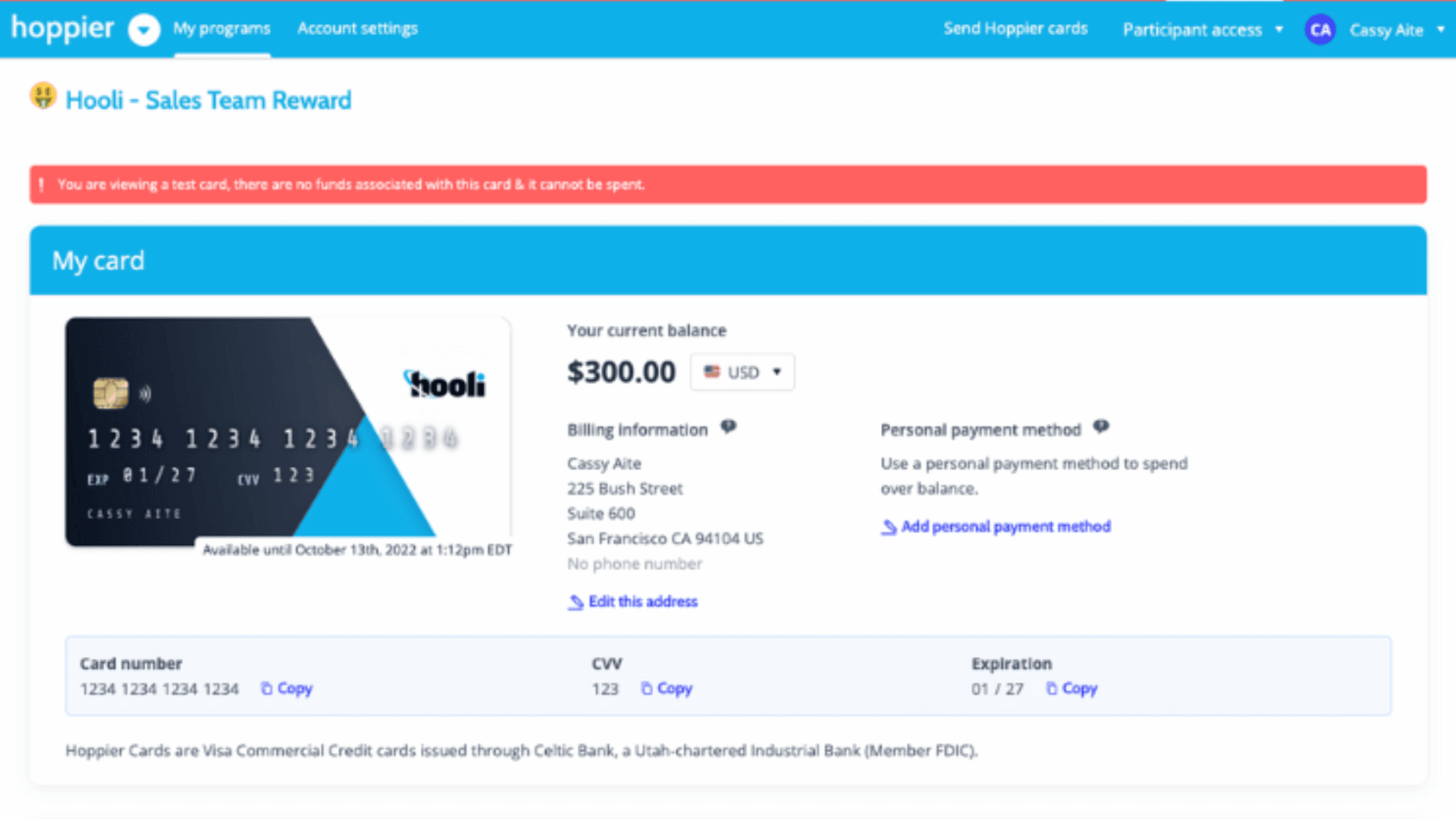
A corporate gift card program is a standing system for sending gift cards to employees or customers: rewards, incentives, milestones, meal benefits, survey payouts. This guide is about running one, not about selling branded gift cards in your own shop - if you want gift card software for a retail store, that is a different product entirely.
We run the platform behind 2,090 of these programs for 1,200+ companies, so the numbers below are measured, not estimated.
The Five Decisions That Define a Program
1. Occasions: the programs that get renewed are trigger-based (work anniversaries, closed deals, completed surveys, spot recognition) rather than one annual blast. Small and timely beats big and generic: programs of 25 cards or fewer see 70% redemption; blasts over 500 see 40%.
2. Amounts: the average card across our platform is $38. Working ranges: $15 to $30 for spot thanks and lunches, $50 to $100 for milestones, $150+ for standout moments. Flat per-card fees (rather than percentage fees) make larger cards cheaper to send, which matters at the milestone tier.
3. Choice: single-brand programs quietly fail people - the Starbucks card for someone with no Starbucks nearby, the .com Amazon code for the teammate in Germany. Letting each recipient pick from 3,000+ brands or a prepaid Visa in their own currency is the single biggest redemption driver we measure.
4. What happens to unspent value: the decision almost nobody makes deliberately. Across our platform, 37% of sent value goes unspent. In most programs that money is simply gone - it is the silent fee. On recovery platforms it returns to your budget. Read the full economics in our gift card breakage breakdown before you pick tooling; it usually decides the choice.
5. Delivery and automation: start with CSV bulk sends, then automate the recurring triggers - a work anniversary synced from your HRIS, a rep hitting quota in your CRM, a customer's first referral - via integrations, the gift card API, or an AI assistant through the Hoppier MCP, so program admin stops being anyone's job.
Our own platform data makes the case for this step: of 4,390 programs created on Hoppier in the past twelve months, 4,389 were set up as one-time sends, 436 carry a month name in the title, and one company rebuilt the same birthday program 42 times in a year. If your program list reads "October lunch, November lunch, December lunch", that is the trigger to automate - the methods are compared in our guide to automating gift card distribution.
What a Program Really Costs
Price the net, not the face value. A worked example for a 100-person recognition program at $50/person/quarter: face value is $20,000/year. On a platform with no recovery, add the unredeemed share - at typical rates that is thousands of dollars vanishing annually, which is how "free" platforms are financed. On a recovery model you pay a visible platform fee and get the unspent share back; at our measured 37% average unspent, recovery usually exceeds the fee by a wide margin. Current rates are on the pricing page, and the trade-offs by platform are in our gift card API ranking and Tremendous comparison.
A Note on Taxes
In most jurisdictions gift cards to employees are taxable compensation regardless of amount - the IRS treats cash equivalents as wages, with no de minimis exception. Your payroll team classifies this; a platform should hand them a clean per-recipient export (ours does exactly that) rather than promising tax magic.
Launch Checklist
- Pick two or three triggers, not ten. Anniversary, spot recognition, and one seasonal send is a complete first year.
- Set amounts by tier and put them in writing so managers spend without asking.
- Default to recipient choice; single-brand only when the brand is the point.
- Confirm what happens to unspent value before signing anything.
- Automate the calendar triggers in month one; manual programs decay.
- Review redemption at 90 days: sub-60% redemption means wrong brands, wrong amounts, or wrong timing - all fixable.
Want to see real setups? Browse example programs by use case, or talk to a specialist and have your first program live this week.

Make Hoppier your unfair advantage
Send rewards, gifts, and perks to employees, clients, and event attendees in 60+ countries - all from one platform.
Get Started