The Complete Guide to Employee Lunch Card Programs


Dining in the office - a particularly polarizing event that invites critiques, diet-pushing, pungent aromas, and an ostensible break from work. Yet from another perspective, it’s perhaps not the eating itself - it’s the inflationary, expensive cost that gets the stomach churning.
However your office (or virtual office) has its lunch, one long-term adage can perhaps be overcome: There’s no such thing as a free lunch.
With employee lunch card programs, maybe there is such a thing. Also known as meal vouchers, food vouchers, or meal tickets, lunch card programs provide much-needed nutrition and employee satisfaction to the average workday while the employer foots the bill.
Call it a fringe employee benefit or a perk, but lunch cards aim to quell your staff’s hunger while keeping them happy and productive. In this complete guide to employee lunch card programs, we’ll discuss the benefits, how to set up your program, the nasty pitfalls, and the inevitability of taxes.
Get hungry; we’re ready to dive in.
The Delicious Benefits of Employee Lunch Card Programs

Employee lunch card programs are certainly a benefit for team members, but employers also capitalize on this perk. In this win-win scenario, no one goes hungry while everyone gets a piece of the pie.
Employer Benefits of Lunch Card Programs
Despite the initial cost, employers can reap the benefits of employee meal cards. While every case is different, the concepts behind the benefits and the statistics that support them don’t lie. Here’s how employers can win through meal allowances.
Attracting and Retaining Talent
According to a study from the U.S. Bureau of Labor Statistics, the median number of years an employee stays with a company is only 3.9 years. Add in that hiring a new employee over one that leaves can cost up to four times their salary, and you’re in quite a predicament.
The only sensible answer is to offer perks - employee meal programs being a focal point. When you purchase meals for employees or provide quick employee reimbursements, you provide an unbeatable benefit that attracts top talent and improves employee retention.
And if you’re looking for young blood, one survey showcased that Gen Z workers would be 72% more likely to join a company - a staggering statistic if you have an aging talent pool.
Flexibility
If you have remote workers or a hybrid team, flexibility is essential. The last thing you want is your staff to go AWOL on a lunch break when you need them. With a meal program, you have multiple options to feed your team. Online staff can opt for food delivery services so they’re home when you need them.
In-office teams also benefit from employee lunch card programs. If your budget allows, an on-site cafeteria or cafe for team lunches streamlines the often time-consuming process of going out to lunch. One ornery waiter or kitchen staff member can cause lunch to take one to two hours.
With employee lunch card programs, you have the flexibility to keep your employees right where you want them - when you need them - and without limiting the perception of limiting their dining options.
Administrative Relief
If you offer meal stipends, good for you. You’ve realized the unlimited potential of boosts to morale and the employee experience.
However, this can also create a hassle. When the administrative staff has to manually enter each stipend or reimburse employees, it creates a bottleneck and takes them away from other important tasks.
Comprehensive employee lunch card tasks eliminate this burden through automation. Since lunch cards are the same amount every week, there’s no need to input different numerals and decimals each week. Your expenses are instantly tracked and uniform. Simply select a weekly budget, set it, and forget it.
Support Employee Well-Being
You may not be able to choose what an employee eats, but you’re supporting employee wellness simply by giving them a free meal and time to eat it. Statistics show that daily breaks throughout the day drastically improve employees’ health, both mentally and physically.
Free meal benefits can also improve employee productivity, bolster job satisfaction, and improve work-life balance - all facets that lead to happier, healthier employees.
Employee Benefits of Lunch Card Programs
Employees love free meals, but a lunch card program also has a myriad of upsides for your entire staff. Beyond being fed at no cost, employees can take advantage of inconspicuous benefits that will have their mind, body, and wallet feeling better.
Also Flexibility
Employee lunch vouchers provide a plethora of meal options for even the most finicky eater. Depending on the program you enact, employees can eat at local restaurants, national chains, or get DoorDash sent right to their doorstep. With so many options, you probably won’t find a more ecstatic group of well-fed employees ready to sink their teeth into the next project.
Budgeting Assistance
Let’s face it. Eating out has gotten more and more expensive over time. As prices have become unsightly, so has people’s ability to budget. It’s difficult to say no to lunch with coworkers, even if money is tight.
A meal program with multiple food options prevents staff from stressing about meal expenses - and putting their money toward health, family, and retirement.
Convenience
Every time an employee goes out to eat, they need to have cards or cash. Plus, the bill-splitting at the end of a meal can be even more of a headache. Armed with only a prepaid card or virtual card, employees have the freedom to eat at their own pace without having cash, cards, or hassle.
How To Start Employee Lunch Card Programs in 5 Easy Steps

If you’ve come this far, you can easily see how an employee lunch card program benefits both employers and employees. Now, it’s time to turn this program into reality. With our step-by-step guide, you can turn the tedious and complex into a streamlined process with ease.
1. Poll Your Team
The first step to a successful employee lunch card program launch is to poll your team. Send out an anonymous survey or poll that addresses these questions:
- Overall interest in the program; if there’s no interest, don’t worry about the hassle
- What food options would they like
- How much flexibility is required
- Ask them to pose any questions or express concerns about the program
2. Create a Budget
Creating a budget can feel like a cumbersome task, but if you follow our simple steps, you can make quick work of the most mundane part of the task:
- Define your program goals: While employee engagement and morale are integral, what else do you aim to achieve? Will a healthier or organic agenda incur more costs? What level of food quality do you want?
- Estimate attendance: Gauging attendance isn’t easy, but you can use other perk and benefit signups as a rubric. If that doesn’t work, use your preliminary poll response as a signal.
- Set spending limits: Create a daily limit for each individual, which is typically between $15 and $30 per person.
- Don’t forget about administrative costs: Setting a spending limit is important, but remember to factor in administrative costs into your final budget.
If you follow these steps, you should have an accurate idea of how much you should budget for your plan. And if you don’t like the numbers, adjust accordingly.
3. Select the Lunch Card Type
Lunch cards are somewhat standard, but you basically have three options. Each is simplistic, but which one you choose depends on your needs and the dining preferences of your employees. The three most popular lunch card types include:
- Prepaid cards: As the name implies, prepaid cards come loaded with the funds for a given period of time, typically weekly, but sometimes monthly. These cards usually have the Visa, MasterCard, or AMEX logo, and can be used anywhere, provided it’s within your meal allowance rules. You should also decide whether you want physical cards or digital cards. We encourage digital options, as it’s more convenient, less to carry, and available to use on mobile apps like Google Wallet.
- Employee-specific cards: If you want more control or you have a deal with local or national restaurants, this is the ideal card. They’re designed specifically for use at partner restaurants or food providers. In some instances, inking a deal with a restaurant group can also give you discounts - so it’s definitely something to think about.
- Employer restaurant cards: These types of cards are easy to comprehend. If you have an on-site cafe, restaurant, or cafeteria, these are the cards you need. Otherwise, opt for a prepaid or restaurant card.
4. Choose a Provider
After you’ve decided on a lunch card type and various dining options, you need to select a provider that matches your needs and budget. At Hoppier, we’ve compiled a list of some of the best employee meal providers to narrow down your search. This includes:
- Hoppier
- Edenred
- Swile
- Sodexo
- GrubHub
- Sharebite
- DoorDash
5. Follow Up With Your Staff
Introducing any new program to employees can be confusing. Hold a quick team meeting, walk everyone through the process, and ask for questions.
A few weeks or months after you launch the program, hold an in-office or Zoom meeting that allows employees to ask any follow-up questions. With any luck, you should see a great increase in participation, understanding, and satisfaction.
Taxes & Lunch Card Programs
Taxes are an inevitable nuisance in the world of employee meal vouchers. Unfortunately, few meal programs qualify for the IRS’s de minimis fringe exemption rules. Only occasional snacks and drinks would prevent you from paying taxes.
As a result, meal card programs are a taxable benefit you need to address. No matter the cost of the program, you need to withhold 7.65% of the total cost of each individual’s meal vouchers and pay them as part of your FICA taxes. Consult your accounting department or the IRS website for efficient ways to process these tax payments.
Get Your Eat On With Help From Hoppier

Regardless of your employees’ tastes and your budget, Hoppier simplifies the entire employee lunch card program process with plenty of features. With a meal voucher initiative powered by Hoppier, you’ll get:
- The ability to send digital gift cards that double as meal vouchers to recipients in over 60 countries
- 24/7 customer support
- Reloadable cards
- Card customization to reinforce your brand
- Refund of any unspent funds on the card at expiration to jump-start your next week or month on meal vouchers
- Available to use at over 500,000 restaurants, grocers, and vendors
- MasterCard or Visa logo - so it’s always accepted everywhere
- Real-time spend tracking
- Complete control of spending limits and meal allowance rules
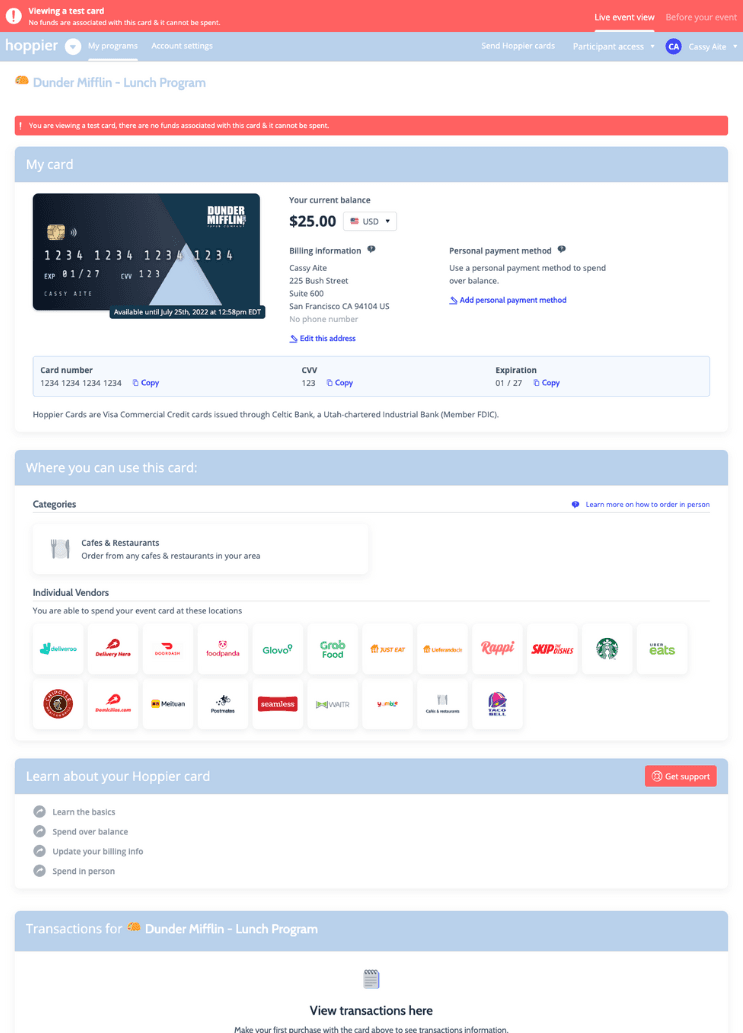
With so much to offer, Hoppier is the go-to choice for employee lunch card programs. Get started with Hoppier to see how they can get your meal allowance initiatives from concept to your staff’s bellies.

Ready to 2x your global engagement at your next event, with Ox stress?
Make Hoppier your unfair advantage today, schedule a demo
Ready to 2x your global engagement at your next event, with Ox stress?
Make Hoppier your unfair advantage today, schedule a demo
Ready to 2x your global engagement at your next event, with Ox stress?
Make Hoppier your unfair advantage today, schedule a demo
Ready to 2x your global engagement at your next event, with Ox stress?
Make Hoppier your unfair advantage today, schedule a demo





Related content


Haz de Hoppier tu ventaja injusta hoy


Nuestro equipo te apoyará para que tus programas sean un éxito

Excelente servicio al cliente
Tiempos de respuesta promedio de 4 minutos
Cobertura internacional




Las Tarjetas Hoppier son tarjetas de crédito comerciales Visa emitidas a través de Celtic Bank
Newark, DE
19702